
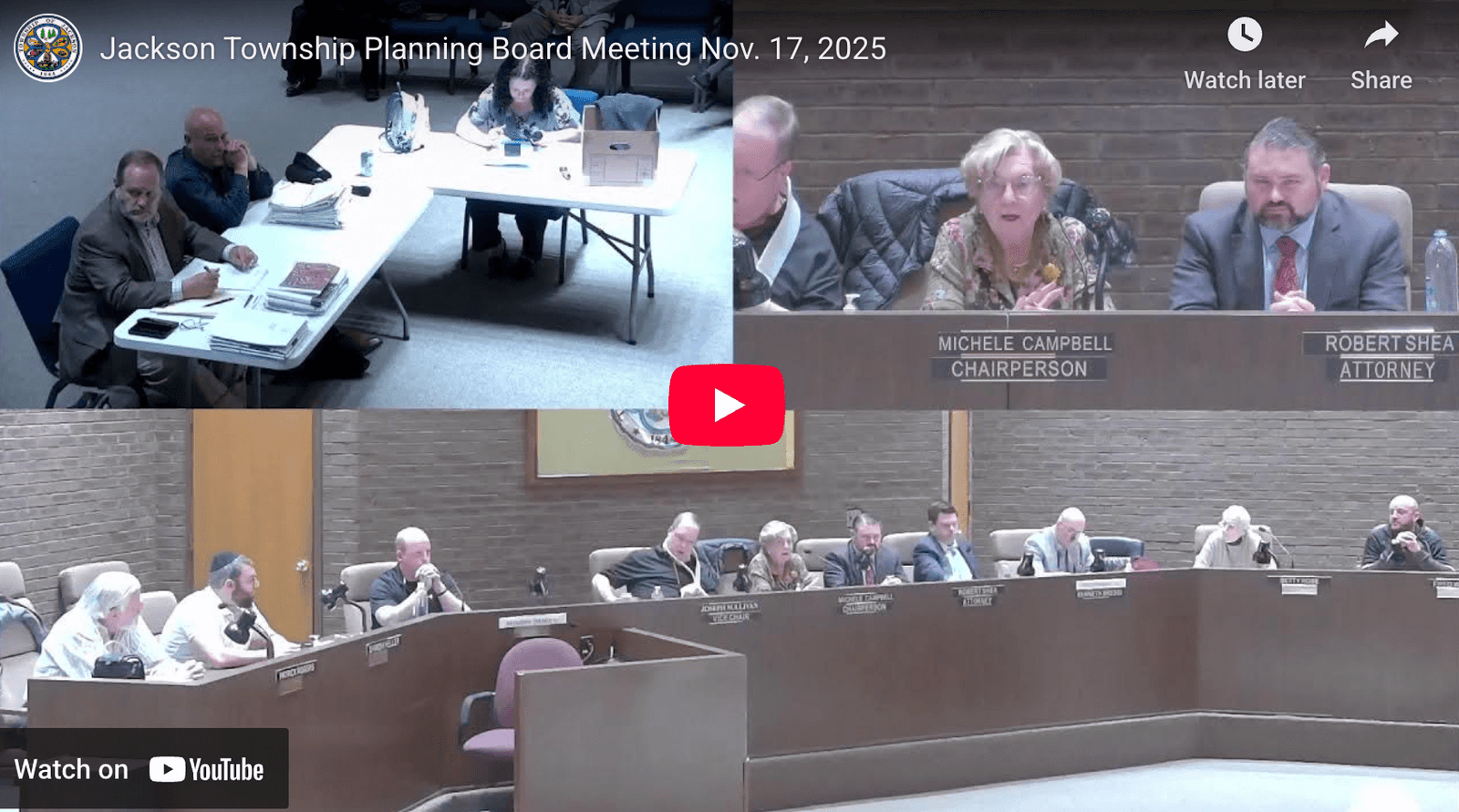
Timestamps below reference approximate moments in the recording.
The November 17 Planning Board meeting drew one of the largest public turnouts in recent years. More than two dozen residents spoke late into the night, raising concerns about environmental damage, procedural failures, density, safety, transparency, and the long-term impact this project will have on surrounding neighborhoods. Many residents expressed frustration with a process they believe is structured to move applications forward regardless of how incompatible they are with Jackson’s character or environmental protections.
This post summarizes each public speaker’s concerns to help residents understand what was discussed and why it matters.
Ed B. (approx 2:35:10)
Ed questioned the logic behind the parking plan, asking why a school that claims students cannot drive would require 80 parking spaces. He said the oversized lot suggests a higher level of use than disclosed and highlighted the applicant’s refusal to consider banked parking. He said the explanation did not align with testimony about daily operations.
Paul R. (approx 2:36–2:40)
Paul asked why the township attorney was present and what federal authority governs these types of schools. He learned that the zoning permissions come from a federal civil rights consent decree, limiting the township’s ability to regulate the project. He criticized the lack of transparency and the fact that important documents are not available online for residents.
Elenor H. (approx 2:55–2:57)
Elenor raised one of the most detailed environmental critiques of the night. She argued that the project threatens nearby wetlands, riparian corridors, and wildlife pathways that depend on dark, undisturbed habitat. She noted that the fencing and walls shown on the plans appear to cut off access to the stream corridor and could affect natural water flow and wildlife movement. She questioned the stormwater system, pointing out the risk of runoff into environmentally sensitive areas and the proximity of septic systems to these buffers. Elenor also focused on the lighting plan, stating that nearly 9000 lumens per pole is excessive for a property located next to wetlands and could disrupt nocturnal wildlife.
She then raised a broader concern about trust and history. Elenor reminded the board that a Rabbi associated with this project had previously been fined for Shemos dumping in the same general area, and said that the township should consider past environmental behavior when evaluating current promises. She questioned how residents can be expected to trust that environmental rules will be followed when there is a documented history of violations connected to the applicant. She said this history, combined with gaps in the current environmental filings, should make the board take a more cautious approach.
Elenor also raised density and habitability issues, arguing that concentrating a large number of residents and staff into a small buildable section increases septic load, water use, and environmental stress. She objected to being cut off during her testimony and said residents were being restricted from discussing legitimate environmental concerns that directly affect public health and neighborhood safety.
Adam H. (approx 3:14–3:20 with later comments)
Adam focused on procedural breakdowns and environmental oversight gaps. Speaking as a resident who also serves on the Environmental Commission, he revealed a township legal memo that appears to discourage commission members from voting no on environmental grounds even when they believe there is environmental harm. He raised missing DEP documentation, possible notice errors involving protected waterways, confusion about wetlands boundaries, and the absence of a Statement of Operations. Adam questioned groundwater discharge permits, septic capacity, long term monitoring requirements, and inconsistencies in what the applicant claimed to have submitted.
He also noted that certain claims made under oath contradicted earlier statements or written submissions, and he questioned whether all of the sworn testimony was truthful. Adam said the township is minimizing environmental review, shifting nearly all responsibility to outside agencies instead of enforcing its own standards. He closed by warning that the township cannot rely on DEP alone to protect the community and that the board should be treating these issues with far more scrutiny.
Brian M. (approx 4:02)
Brian asked whether the buffer around the site should be 300 feet or 600 feet and questioned whether the stricter environmental standard should apply.
Greg E. (approx 4:54:36)
Greg raised concerns about emergency access, noting that a neighbor’s home would be nearly surrounded by the project. He questioned whether rooftop mechanical units will create disruptive noise and warned about the long-term quality-of-life impacts for nearby residents.
Kara G. (approx 4:50)
Kara spoke on behalf of more than 1,000 residents who signed a petition opposing the project. She described the emotional and physical toll on families who feel the board is not listening. She said residents deal with the long-term consequences, while the board and applicant go home unaffected. Kara said the process feels predetermined and that the community no longer trusts the planning system.
Thomas L. (approx 4:13–4:15)
Thomas raised flooding issues near Mary Beth Road and asked whether the gym could be used for events. He was told it is not designed for event use.
Tom G. (approx 4:15–4:17)
Tom questioned whether the project will rely on wells or public water and raised aquifer protection concerns. He also asked whether residents could eventually be required to connect to new water infrastructure.
Theresa R. (approx 5:22:44–5:23:45)
Theresa explained the density issue clearly. She said the parcel is 25 acres, but only 5.6 acres are buildable, and the applicant wants to place a 50,000 square foot structure and more than 200 people onto that small area. She compared this to the nearby homes, which average about 2,000 square feet on 1.1 acre lots. She said the project is equivalent to placing 25 homes on 5.6 acres and warned that it is not compatible with the neighborhood.
Joseph H. (approx 4:28–4:31)
Joseph asked why this particular area was selected for the project. The board attorney dismissed the question, stating that the board cannot consider alternate locations under state law.
Dan A. (approx 4:30)
Dan asked whether the school has any connection to pre-military training programs. The board attorney immediately shut down the question as irrelevant to the board’s jurisdiction.
Linda T. (approx 4:31–4:32)
Linda asked whether bus transportation would be taxpayer funded and raised concerns about the history of accidents on Frank Applegate Road.
Eric J. (approx 4:34–4:36)
Eric confirmed that the entire green area will be clear cut and asked whether the remaining portions of the parcel could be subdivided later, raising concerns about future expansion. He also mentioned sight line issues on a blind curve.
Raymond C. (approx 4:52)
Raymond focused on the lack of accessible environmental information. He noted that critical parts of the plan, including septic field locations and stormwater systems, were not visible on the boards or the projected plans. He said that without clear environmental mapping, residents cannot evaluate impacts on wells, groundwater, and neighborhood safety. Raymond argued that the absence of clear information raises questions about whether the application should even be considered complete and said the township owes residents far more transparency on these issues.
Joanne P. (approx 4:43:08–4:46:25)
Joanne reminded the board of past environmental violations at this very site and asked for the remediation closure letter to be read into the record. The attorney refused. She spoke about aquifer safety and the health of her family and neighbors. She also questioned why the board could not wait for DEP approval before voting, but the attorney said doing so would be illegal. Joanne said the board should be working with residents, not against them.
Holly R. (approx 4:58:45)
Holly provided one of the most technically grounded environmental analyses of the night. She explained how the project conflicts with the Master Plan, C1 stream protections, threatened and endangered species considerations, and Ocean County natural lands standards. She described how the soil composition in the area makes it vulnerable to erosion, sediment movement, and contamination if disturbed at the level required for this project. Holly warned that concentrating a large building and population on a small section of the parcel will stress groundwater resources and disrupt natural drainage patterns. She concluded that the application does not comply with environmental expectations at the state or county level and should be denied for that reason alone.
Final Public Themes
Residents repeatedly said they feel unheard and unprotected. Many said the board treats valid concerns as irrelevant and shifts responsibility to outside agencies. Several speakers noted that the township should track outside approvals for each project so residents are not left guessing whether state conditions have been met. Others stressed that the board should not continue approving projects that drastically alter residential neighborhoods and degrade environmental resources.
Closing Summary
The board ultimately agreed to advance the application to the next stage, DEP review, with the exception of Ray Tremer, who did not support moving it forward. Residents left the meeting frustrated and discouraged. Many expressed concern that the Planning Board appears unwilling to reject applications no matter how incompatible they are with surrounding neighborhoods. Speakers made it clear that the community wants transparency, environmental accountability, and planning decisions that reflect the people who live in these neighborhoods, not just the technical minimums required by outside agencies